- Get link
- X
- Other Apps
Stress Hormones and Insomnia Cortisol: What the Research Says About Elevated, Blunted and the 3 a.m. Myth
Stress Hormones and Insomnia Cortisol: What the Research Says About Elevated, Blunted and the 3 a.m. Myth
By Chester Takau · November 2026
Cortisol and insomnia are linked, but not in the simple "too much cortisol keeps you awake" way that social media suggests. Chronic insomnia has been tied to higher cortisol around sleep onset and across 24 hours, yet a 2026 study of 295 young adults found that more severe insomnia went with a blunted cortisol response to stress. Cortisol also does not spike to wake you at 3 a.m. The evidence points to a dysregulated stress system, and it cannot yet say whether that system causes insomnia or results from it.
About the author
Chester Takau is an independent writer researching sleep science and meditation. Content is educational and not a substitute for medical advice. See more about this site or get in touch.
This is a research piece. I haven't measured my own cortisol and I'm not a clinician. Its angle is to line up the studies that disagree with each other, which most "lower your cortisol" articles skip. Every claim comes from the sources listed at the end.
What does cortisol normally do across a day?
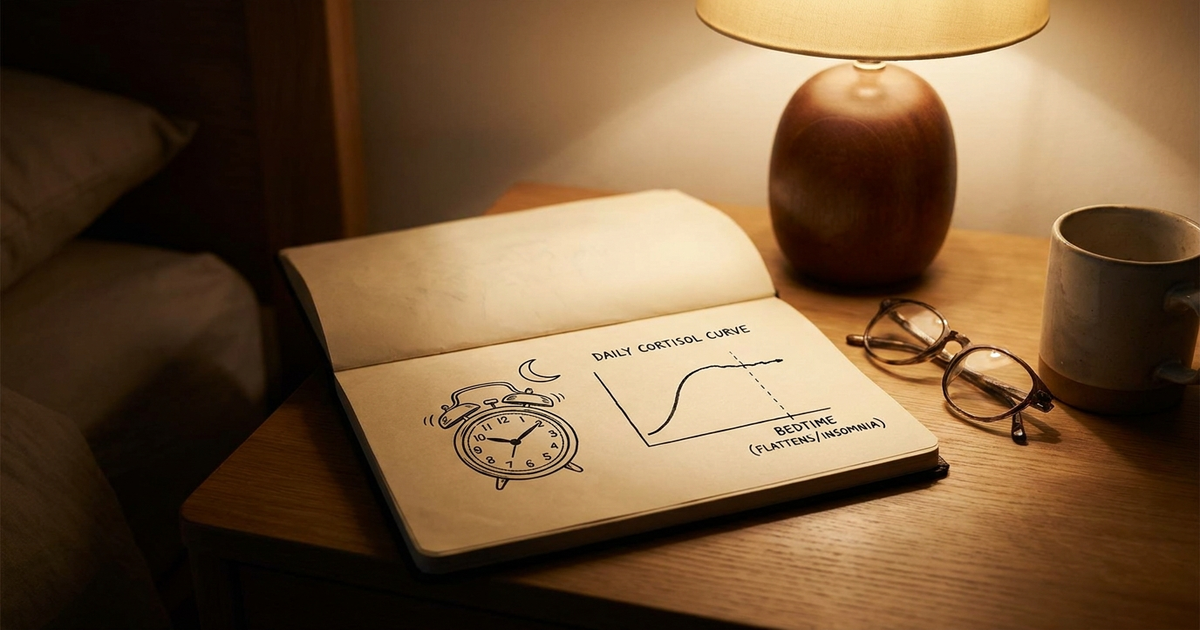
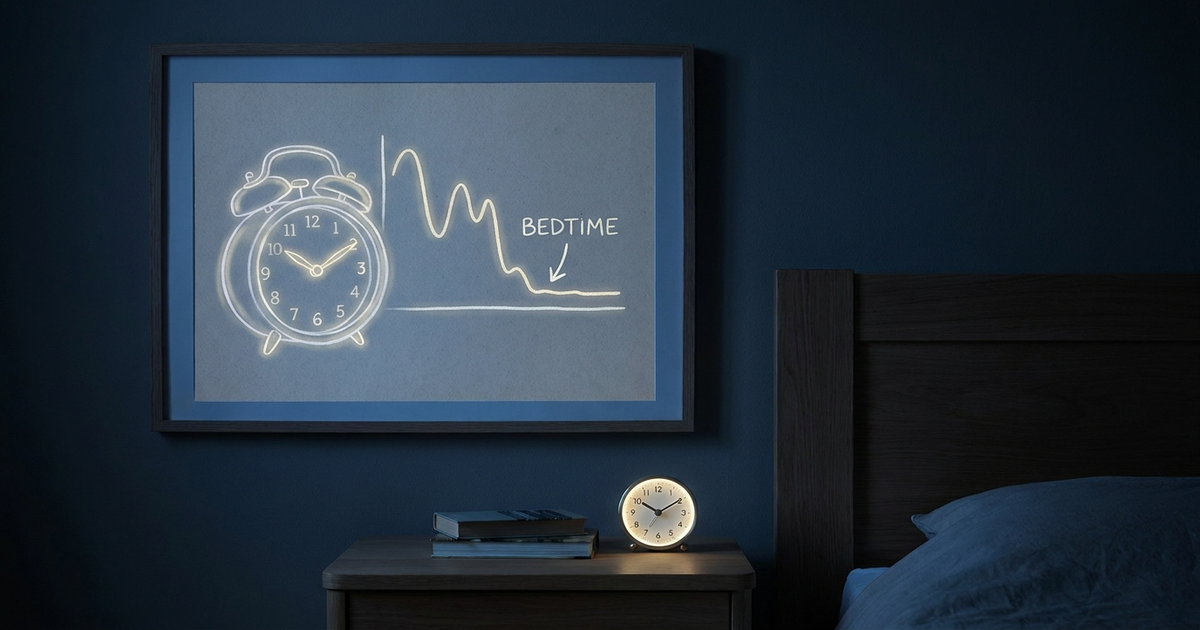
Cortisol follows a daily rhythm. It rises in the early morning, peaks soon after waking, then falls through the day to its lowest point around bedtime. A healthy night depends on that evening drop. Most of the findings below describe a pattern that departs from this curve, either a flatter slope, a higher evening level, or a stress response that is too weak.
Your body clock sets this timing, which is one reason chronotype matters.
Is cortisol actually higher in people with insomnia?
Sometimes, and the answer depends on when you measure. The landmark study here is Vgontzas and colleagues in the Journal of Clinical Endocrinology & Metabolism (2001), which found chronic insomnia was associated with increased 24-hour ACTH and cortisol secretion. The authors read this as hyperarousal of the central nervous system rather than simple sleep loss.
A 2026 pilot in Frontiers in Neuroscience found something similar in a very different group. Among 40 people newly diagnosed with head and neck cancer, worse perceived sleep quality went with flatter daily cortisol slopes (r = 0.48) and higher evening cortisol (r = 0.40). Two cautions apply. The analyses were unadjusted, and sleep measured by wrist actigraphy did not line up with cortisol at all. The authors warn against a causal reading.
Sleep scientist Matthew Walker adds an important qualifier. In his conversation with Andrew Huberman (the transcript is marked as under human review, so wording may be refined), he describes insomnia patients whose cortisol falls through the evening and then rises again right around sleep onset:
"The insomnia patients go down and down and down, and then they have a rise back up right around that sleep onset period." … "it's not as though net net overall there is a higher level of cortisol in people with insomnia."
The relevant chapter, "Light, Day & Night; Cortisol, Insomnia," starts around 12:05. The video dates from 2024, but it is the clearest spoken explanation I found of why the average can hide the problem.
Why would more severe insomnia mean a weaker cortisol response?
This is the finding that breaks the "high cortisol" story. Vargas and colleagues at Notre Dame's Sleep and Health Research Lab (2026) tested 295 young adults with a lab stressor. After controlling for gender and hormonal contraceptive use, greater insomnia symptom severity predicted a significantly more blunted cortisol reaction.
Put next to the older work, the picture is of a stress system that is out of tune in more than one direction: elevated around the night, flat when challenged. That is why "high cortisol" is too crude a label. A separate small SLEEP 2026 abstract (41 female college students) found that a higher cortisol awakening response went with more nightmares (r = .35) and more global sleep disturbance (r = .34), and the direction of that effect is unclear.
Does a cortisol spike wake you at 3 a.m.?
Probably not. A University of Bristol study led by Stafford Lightman (Proceedings of the Royal Society B, January 2025, 201 people) found that cortisol rises before waking as part of the circadian rhythm, and that waking itself does not increase the rate of cortisol secretion. Physician-reviewed guides likewise say cortisol does not typically spike sharply at exactly 3 a.m. in healthy people. That does not mean 3 a.m. waking is imaginary, only that "a cortisol surge woke me" is an unproven explanation for it.
Which comes first, high cortisol or poor sleep?
Nobody has settled this. The "feedback loop" idea, in which sleep loss raises cortisol and raised cortisol blocks sleep, is common in popular content, but the studies above are mostly correlational. The table lays out how each finding should be read.
Should I test my cortisol?
The research gives you reason for caution. A 2026 scoping review in Clocks & Sleep concluded that salivary cortisol "shows limited consistency as a biomarker" of sleep quality, and that its link with sleep depends heavily on methods and context. (I could only read the search listing for that review, not the full page.) One test result on one night is a weak guide, which sits uneasily with direct-to-consumer cortisol kits.
It is also worth ruling out look-alikes before blaming cortisol. A 2026 study in Medicina of 73 people with moderate-to-severe sleep apnea found higher evening cortisol in those with a particular pattern of airway collapse, which the authors call "novel but exploratory." Apnea, thyroid problems and menopause can all cause early waking, so a doctor can tell you more than a home kit.
What actually helps when stress is keeping you awake?
Online threads are full of supplement suggestions such as phosphatidylserine, ashwagandha and magnesium glycinate. One commentary I read promoting them cited no primary studies, and at least one user said phosphatidylserine did little for them. I found no strong trial evidence in this research that any of them fixes cortisol-linked insomnia, so I wouldn't lean on them.
The first-line treatment for chronic insomnia is cognitive behavioral therapy for insomnia (CBT-I), and a registered trial (NCT07156383) is testing whether changes in cortisol help explain how it works. If you want to try the approach, a doctor or sleep specialist can point you to a qualified CBT-I provider.
Smaller habits fit the rhythm described above: dimmer evening light, a caffeine cutoff in the early afternoon (Huberman suggests around 2:30 to 3 p.m.), and a consistent wake time. Disrupted routines also matter, and our explainer on shift work sleep disorder shows what happens when your schedule fights your body clock. If insomnia lasts more than a few weeks, or you snore heavily or stop breathing at night, see a doctor.
Sources: Vargas et al. 2026, insomnia severity and blunted cortisol reactivity (lab summary), Vgontzas et al., JCEM, chronic insomnia and 24-hour HPA activation, University of Bristol, Proc. R. Soc. B 2025, Frontiers in Neuroscience 2026, SLEEP 2026 abstract on cortisol awakening response and nightmares, Clocks & Sleep 2026 scoping review, Medicina 2026, sleep apnea and evening cortisol, Huberman Lab and Matthew Walker transcript.
Updated November 2026. General information, not medical advice. See a doctor about persistent sleep problems.
Transparency note: This article was researched and written by Chester Takau with AI assistance for research gathering and drafting. All recommendations reflect the author's own editorial judgment.
Comments
Post a Comment