- Get link
- X
- Other Apps
Does a Cold Room Really Improve Sleep? What 2026 Studies Say About the Best Temperature
By Chester Takau · November 2026
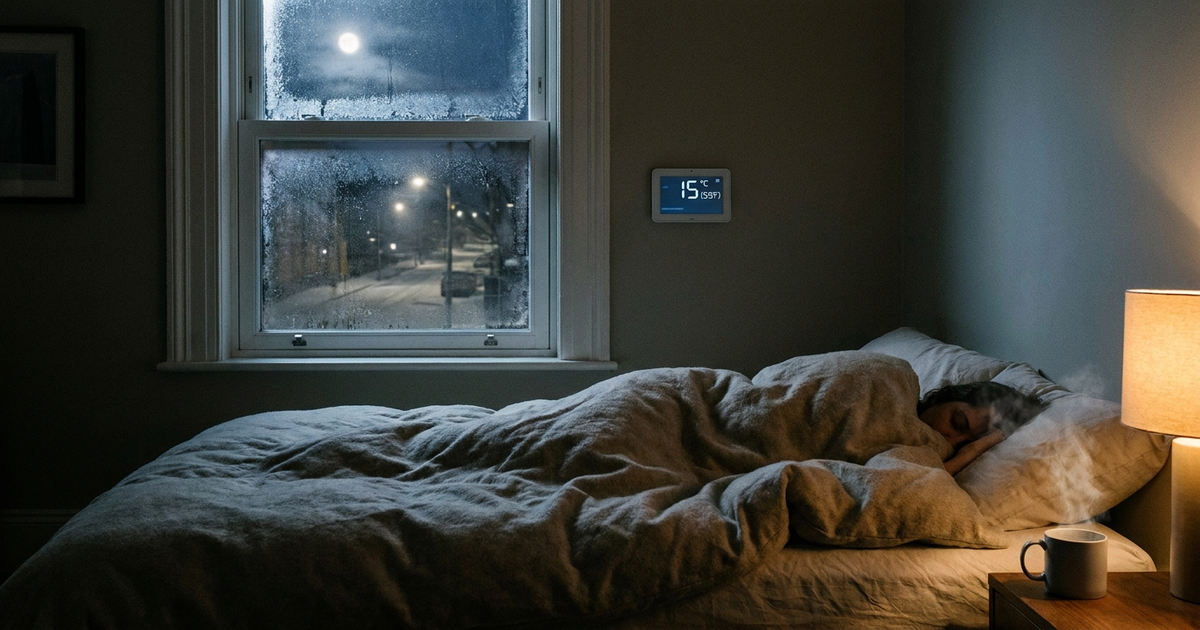
A cool room helps. A cold one probably doesn't help more. US guidance says 60 to 67°F (15 to 19°C), because your core body temperature needs to fall during sleep. But 2026 studies in real homes put the comfortable point warmer: a Hong Kong dorm study found discomfort was lowest at about 24°C (75°F) in summer. Bedding, age and climate move the number, and "colder" is not the same as "better."
About the author
Chester Takau is an independent writer researching sleep science and meditation. Content is educational and not a substitute for medical advice. See more about this site or get in touch.
This is a research piece. I haven't run a temperature experiment of my own. Where I could only read an abstract or a news summary, I say so.
Why is cooler supposed to be better?
Cleveland Clinic sleep specialist Dr. Brian Chen backs the usual 60 to 67°F range. In a May 2026 newsroom piece he said: "Your core body temperature is supposed to drop to its lowest point during sleep as part of your circadian rhythm." A hot bedroom works against that drop.
A Journal of Sleep Research abstract from the 2026 European Sleep Research Society meeting adds a detail: forehead and temple skin temperature was highest during deep sleep (34.8°C awake, 35.3°C in deep sleep). Your skin warms as your core cools, which is why the room has to let heat leave your body. Only the abstract was available to me (source).
Cleveland Clinic's explainer video above covers the same ground. I couldn't read its transcript, so I'm not quoting it.
Do the 2026 studies agree with 60 to 67°F?
Not really. Here is how the numbers line up:
| Source | Who / where | What it found |
|---|---|---|
| Cleveland Clinic (May 2026) | General US guidance | 60 to 67°F (15 to 19°C) |
| PolyU, Building and Environment (2026) | 33 Hong Kong students, one summer week | Least discomfort at about 24 to 24.6°C; authors call 23 to 25°C a "slightly cool" best range |
| BMC Medicine (Jan 2026, via News-Medical) | 47 Queensland adults aged 68 to 77, summer | Rooms above 24°C raised odds of heart-stress markers during sleep; stronger above 26°C |
| Sleep Foundation (citing Hebrew SeniorLife) | Older adults | 68 to 77°F range; sleep got worse below 68°F |
Two things explain most of the gap. The warmer figures come from summer studies in warm climates and from older adults, and the US range is general advice. Neither contradicts the idea that heat hurts sleep. They disagree about how far down you should go.
Is the benefit measured or just felt?
This is the part most "cold room" pages skip. In the PolyU study, warmer bedrooms went with more discomfort and worse self-reported sleep, but sleep measured by devices showed weaker, less consistent links to temperature. Cooler rooms improved how well people said they slept more than what the devices recorded. The sample was 33 students, so it is a hint rather than a verdict.
An October 2026 Sleep Health study of a national sample of young adults found bedroom temperature, light and noise were linked to later sleep timing and worse sleep quality, but not to how long people slept (abstract only; full text blocked). So the room seems to affect how sleep goes more than how much of it you get.
Can a room be too cold to sleep well?
Probably, though the evidence is thinner. A GP quoted by Tom's Guide said the room shouldn't be icy, and that well below about 18°C people can lie awake longer. Coverage also mentions links between cold nights and less REM sleep. I'd treat both as plausible, not settled. Hebrew SeniorLife's finding that older adults slept worse below 68°F points the same way for that age group.
What about a cold room with a heavy duvet?
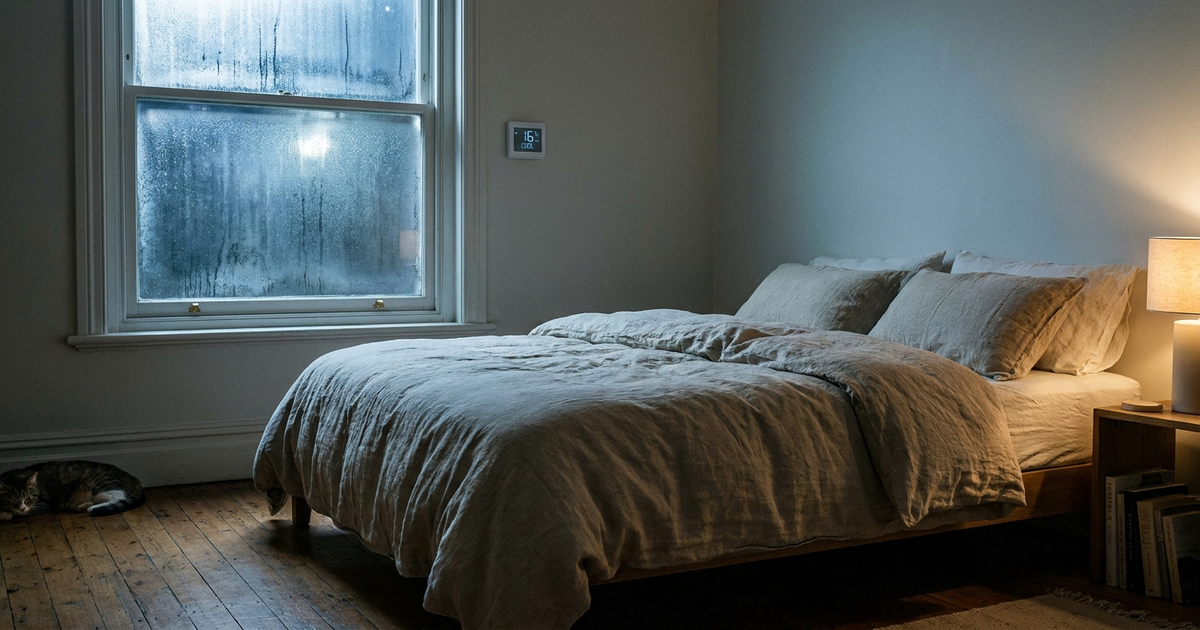
Often the better trade. In the PolyU study, people adjusted their bedding more than the room itself, so "cool room, warm bed" is how many people actually cope. The air temperature and the microclimate under your covers are separate questions. If you share a bed and argue over the thermostat, separate duvets are one low-cost fix.
Does sleeping cold burn fat or help melatonin?
Be skeptical. The fat-burning claims lean on an older study comparing 66°F and 75°F rooms for insulin sensitivity. That's about metabolism, not sleep quality. The melatonin claim comes from single experts in TV segments, not from settled research. Many top-ranking "cold room" pages are also written by mattress and cooling-gear sellers, so they have a reason to push the cold.
What if I can't control the thermostat?
A field trial in 18 Singapore homes (Building and Environment, October 2026, abstract only) found that a warmer room before bed made people less comfortable and did not help them fall asleep faster. A separate ESRS abstract found that changing bedroom temperature through the night did not affect next-day alertness or thinking. So you don't need to engineer a perfect overnight curve.
Without AC, lighter bedding, a fan and cooling the room before bed are the obvious levers, though I found no 2026 trial testing them head to head.
Quick answers
What thermostat setting should I try? Start in the high 60s°F (about 19 to 20°C) and adjust by comfort. If it's summer or you're older, the studies above suggest the low-to-mid 70s°F may suit you better.
Why do I wake around 3 am in winter? I found no study that answers this directly, so I won't guess. If waking is frequent, stimulus control therapy, a core CBT-I technique, is a better-evidenced place to start than the thermostat.
Is this medical advice? No. If you have chronic insomnia, a heart condition or are an older adult worried about overnight heat, talk to a clinician.
Sources: PolyU bedroom thermal conditions, Cleveland Clinic newsroom, News-Medical on BMC Medicine, Sleep Foundation, Sleep Health, Building and Environment (Singapore trial), Journal of Sleep Research ESRS abstracts, Tom's Guide, Cleveland Clinic video.
Updated November 2026. General guidance, not medical advice.
Transparency note: This article was researched and written by Chester Takau with AI assistance for research gathering and drafting. All recommendations reflect the author's own editorial judgment.
Comments
Post a Comment