What Is the Vagus Nerve and Sleep? How They Connect and What the Evidence Says
By Chester Takau · November 2026
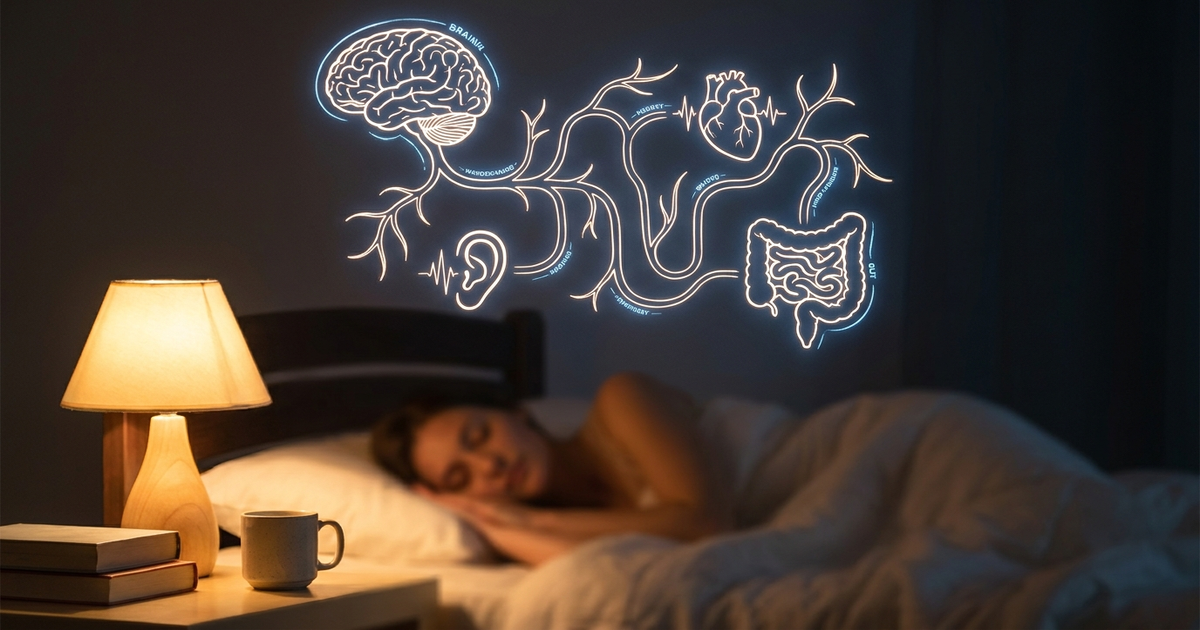
The vagus nerve is the long nerve that links your brain to your heart, lungs and gut, and it is a main route of the body's "rest and digest" system. At night it helps slow your heart rate and settle your body for sleep. A 2026 meta-analysis of 13 trials found that stimulating it through the ear improved sleep quality, but researchers still call the evidence for sleep "promising but preliminary." Implanted neck devices are a different matter and can make breathing during sleep worse.
About the author
Chester Takau is an independent writer researching sleep science and meditation. Content is educational and not a substitute for medical advice. See more about this site or get in touch.
This is a research piece. I haven't tested any vagus devices myself, and I'm not a clinician. Everything below comes from the sources listed at the end.
Is the vagus nerve just a calming nerve?
No, and this is the point most sleep content skips. Neuroscientist Andrew Huberman argues that calling the vagus simply a calming nerve is "a bit of a misnomer," because some vagal pathways increase alertness. The useful sleep signal is heart rate variability (HRV), the small beat-to-beat changes in your pulse that reflect how well your body shifts between states.
As Huberman puts it in his episode on the vagus nerve:
"You want it during sleep and you want it during wakeful states."
Does stimulating the vagus nerve help you sleep?
For ear (transcutaneous) stimulation, the early signs are positive. A meta-analysis in Sleep Medicine Reviews by Choi, Choi and Kang pooled 13 randomized trials with 690 people and found better sleep quality and fewer insomnia symptoms, with younger participants tending to improve more. A July 2026 opinion piece in Frontiers in Pain Research cites one sham-controlled insomnia trial (72 people) in which PSQI scores fell 4.2 points more than with sham after 8 weeks. Its authors still say ear stimulation should support CBT-I, not replace it as first-line treatment. CBT-I remains the first-line approach.
Trials are still being registered. One, listed in October 2026, will test ear-clip stimulation for insomnia in 52 people in stroke rehab. Expert caution is also fair: Prof. Arshad Majid told The Conversation that the vagus "is not an on-off button," that effects vary widely between people, and that stimulation can sometimes cause headaches.
Are all "vagus nerve stimulation" devices the same?
They are not, and the difference is a safety issue. The table separates the two kinds the research discusses.
The Frontiers authors say the implanted and ear approaches "must be clearly distinguished." If you have sleep apnea or any heart or neurological condition, talk to your doctor before trying a device.
What can I try without a device?
Slow breathing with a long exhale is the usual free suggestion, and the 4-7-8 breathing technique is one structured version. I found no trial that proves it works through the vagus nerve specifically, so treat it as a low-risk habit rather than a treatment. A reviewer at Tom's Guide who used a Pulsetto device for a week suspected the gains came from better sleep habits overall, which is a fair caution. Pulsetto's "18% better sleep" figure comes from the company itself.
Is my vagus nerve why I wake at 3 a.m. or freeze in sleep paralysis?
Claims like this are everywhere online, and I found no solid evidence tying 3 a.m. waking to the vagus nerve. Sleep paralysis is a separate matter involving the sleep-wake transition.
How would I know if it's working?
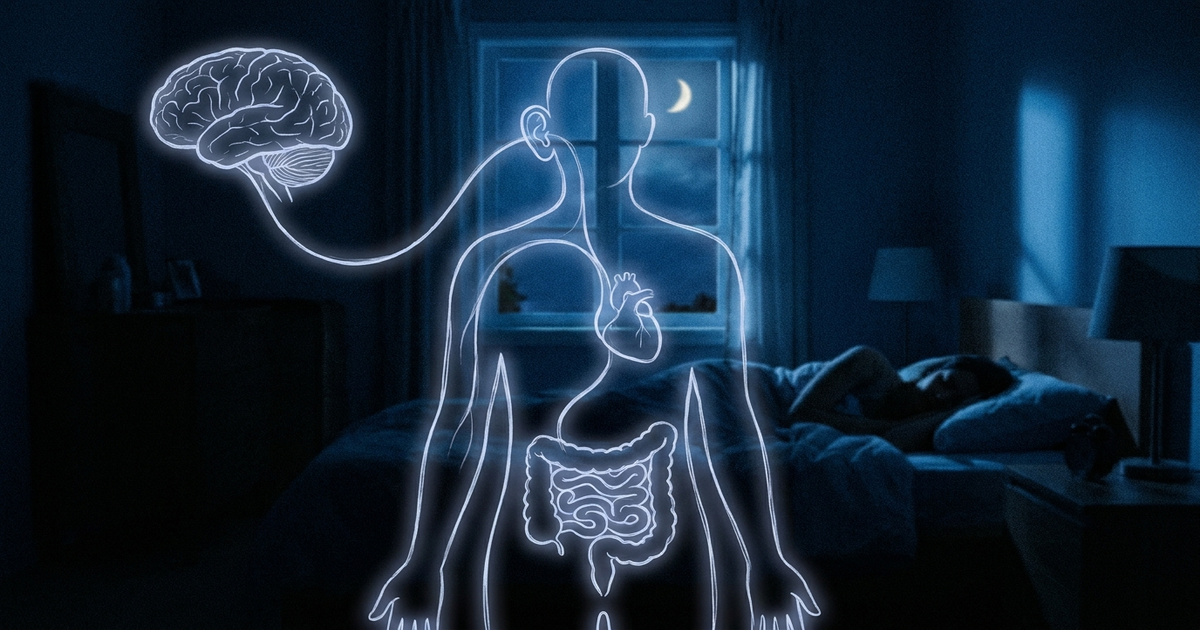
Wearable users on Reddit judge vagal techniques by overnight HRV, which is reasonable but noisy; one night tells you little. Track sleep quality and daytime energy for a few weeks and change one thing at a time. If insomnia persists, see a doctor.
Sources: Frontiers in Pain Research, July 16, 2026, Incheon National University release on the Sleep Medicine Reviews meta-analysis, June 23, 2026, ClinicalTrials.gov NCT07858656, The Conversation, Feb 10, 2026, Case report: implanted VNS and obstructive sleep apnea, Huberman Lab, Tom's Guide, CU Anschutz.
Updated November 2026. General information, not medical advice. See a doctor about persistent sleep problems.
Transparency note: This article was researched and written by Chester Takau with AI assistance for research gathering and drafting. All recommendations reflect the author's own editorial judgment.
Comments
Post a Comment