- Get link
- X
- Other Apps
How to Sleep When Partner Snores: What Actually Works Tonight
By Chester Takau · July 2026 · Field Notes
Nearly a third of American adults now sleep in a separate bed or room from their partner, and snoring is the single biggest reason why. That statistic alone tells you this isn't a minor annoyance you're supposed to just tolerate — it's common enough that entire surveys are built around it.
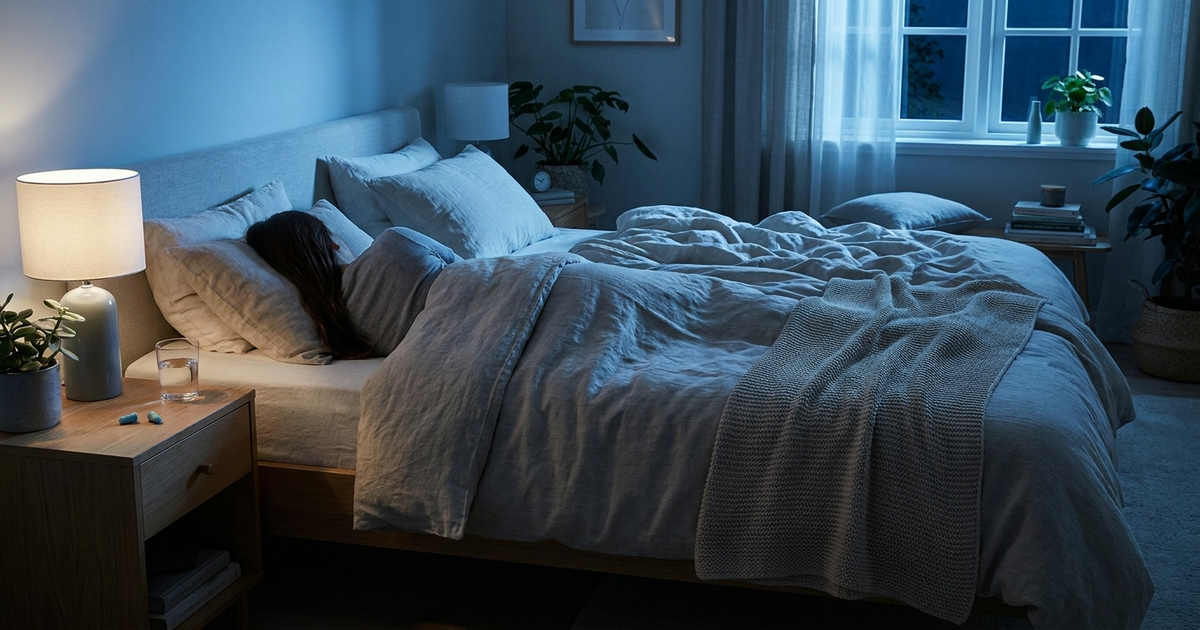
The fastest fix is physical, not psychological: block or mask the sound before you try to out-think it. Snoring commonly hits 60–90 decibels — roughly the volume of a lawnmower — which is loud enough that willpower and "just relaxing" rarely beat it. Earplugs or snore-masking earbuds worn nightly, a fixed wind-down routine that gets you asleep before your partner starts, and knowing when snoring stops being a sleep problem and starts being a medical one — those are the three things that actually move the needle. Here's what the research and a lot of frustrated couples say works.
What the data says
- 31% of U.S. adults sleep separately from a partner; snoring is cited by 57% as the reason — the single biggest cause (AASM, Jan 2025)
- 75% of people say a partner's snoring hurts their own sleep quality; 44% report next-day sleepiness (Sleep Foundation, Jan 2024)
- About 94% of people with obstructive sleep apnea snore, and roughly 80% of OSA cases go undiagnosed
- Snoring commonly measures 60–90 decibels — louder than normal conversation, close to a lawnmower
- Among couples who do separate rooms, roughly half report meaningfully better sleep afterward
Can I actually fall asleep before the snoring starts?
Partly, and it's worth trying before you reach for anything else. Snoring usually gets louder as someone sinks deeper into sleep, so the first 20–30 minutes after lights-out are often the quietest window you'll get. Start your own wind-down slightly earlier than your partner's — phone away, lights dimmed, a consistent pre-sleep routine — so you're already drifting off rather than lying there waiting. A slow breathing pattern like 4-7-8 breathing gives you something to do with the ten minutes you'd otherwise spend listening for the first snore. It won't work every night — sometimes you'll be the one still awake at 1 a.m. — but stacking the odds in your favor beats leaving it to chance.
Earplugs or white noise — which actually blocks it better?
Because snoring is loud rather than just annoying, physically blocking it tends to outperform masking it. Foam earplugs are cheap, reduce noise by roughly 25–33 decibels, and are safe for nightly use as long as you keep them clean and let your ears breathe during the day. White noise or a fan doesn't reduce the decibels reaching your ears — it just gives your brain a steadier, more predictable sound to latch onto instead of an irregular snore-and-silence pattern, which some people find easier to tune out even though the raw volume hasn't changed. Purpose-built sleep earbuds with active noise cancelling and snore-masking sound libraries (Soundcore's Sleep A30 and Ozlo's Sleepbuds are recent examples) combine both approaches, at a higher price than a $10 pack of foam plugs. Either way, side sleepers should check the earbud shape is low-profile enough not to dig into the ear against a pillow, and it's worth setting a backup alarm on vibrate if you rely on earplugs every night, in case you sleep through your phone.
The video above runs through several of these coping tactics side by side if you want to see the earplug-versus-earbud tradeoffs laid out visually rather than just described.
Does nudging them onto their side actually stop the snoring?
Often, yes, at least for that episode — snoring gets worse on the back because gravity lets the tongue and soft palate collapse toward the throat. A gentle nudge or an elbow works, but it wakes both of you and doesn't fix tomorrow night. Positional aids do the nudging for you: a tennis ball sewn into the back of a pajama shirt, a wedge pillow that elevates the upper body, or a small vibrating positional trainer that buzzes when someone rolls onto their back. None of these need your partner to wake up and cooperate in the moment, which is the real advantage over a middle-of-the-night poke.
Is a "sleep divorce" bad for the relationship, or the healthy move?
The evidence leans toward "healthy, if you frame it right." Couples who move to separate rooms over snoring commonly report real gains — averaging close to an extra hour of sleep a night for the non-snoring partner — and most say their own sleep improved afterward. The pushback is real too: in the Sleep Foundation's survey, 38% of people said they'd refuse separate rooms because they don't want to sleep apart, treating it as a threat to intimacy rather than a practical fix. Both reactions are reasonable. If you go this route, protect the parts of the relationship that separate rooms actually threaten — a shared wind-down together before one of you moves rooms, and a fixed reunion each morning — rather than treating "sleep divorce" as an all-or-nothing switch. Framing it as "I want us both sleeping well" rather than "I can't stand sleeping next to you" changes how it lands.
When is snoring actually a medical problem, not just noise?
Take it seriously if the snoring is loud and constant regardless of position, if your partner gasps, chokes, or has pauses in breathing during the night, or if they're excessively sleepy during the day despite a full night in bed. Around 94% of people with obstructive sleep apnea snore, and an estimated 80% of OSA cases are never diagnosed — which means a snoring partner is sometimes the only visible symptom of a condition with real cardiovascular and cognitive risks. Chronic sleep loss from listening to it isn't just an inconvenience either: poor sleepers in one long-running study developed cardiovascular disease years earlier than good sleepers. If any of the apnea signs above sound familiar, that's a reason to see a doctor, not a reason to buy a louder white-noise machine. Building consistent sleep habits on your own side of the problem still helps in the meantime — our sleep hygiene guide covers the basics worth having in place regardless of what's happening on the other side of the bed.
My partner denies they even snore — now what?
This is common enough to have research behind it: people, especially women, tend to underestimate or underreport their own snoring, so denial often isn't stubbornness — it's a genuine blind spot, since nobody hears themselves sleep. A phone recording app run overnight settles the argument quickly and without a confrontation. Bring it up outside the bedroom, during the day, and lead with the sleep-loss angle rather than the noise itself: "I'm not sleeping well and I want us to figure out why" invites problem-solving. "You snore so loud I can't stand it" invites defensiveness. If resentment has already built up from months of lost sleep, that's worth naming honestly too — our guide to calming a racing mind at bedtime covers techniques for the nights when frustration, not just noise, is what's keeping you awake.
Do anti-snoring gadgets — mouth tape, nasal strips, special pillows — actually work?
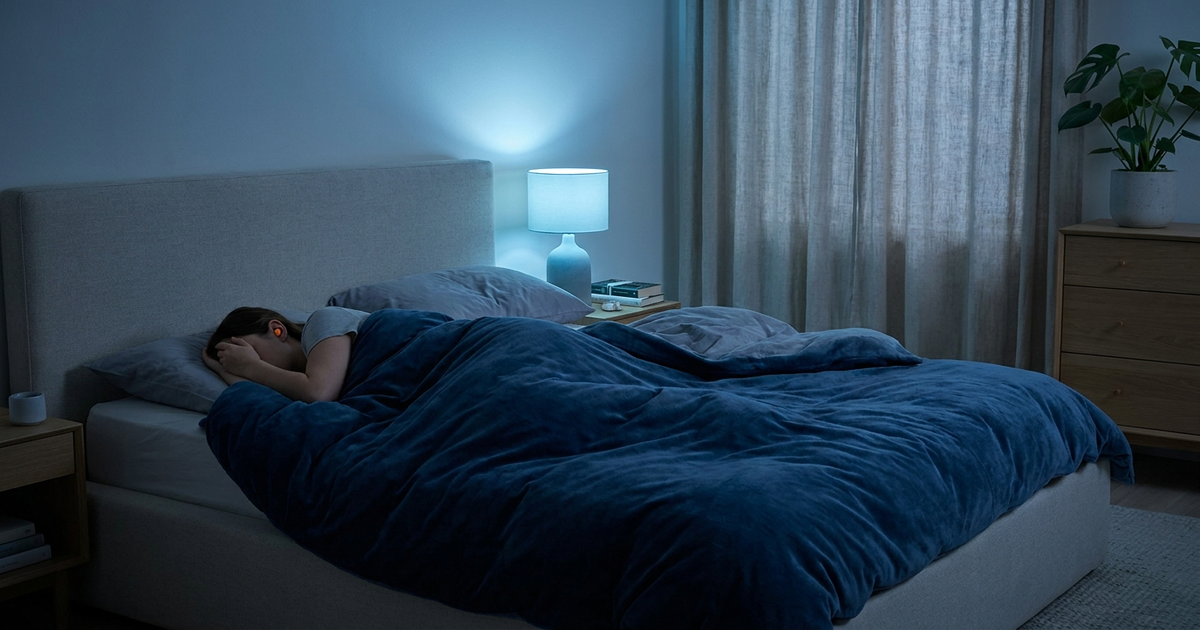
Results are mixed and person-specific. Nasal strips and dilators can help if the snoring is coming from nasal congestion, and anti-snore pillows that encourage side-sleeping work through the same positional mechanism as a tennis ball, just more comfortably. Mouth tape has a smaller and shakier evidence base than either, and isn't recommended for anyone with nasal congestion, sleep apnea, or breathing difficulty — taping the mouth shut on someone who needs to breathe through it is the wrong direction entirely. None of these fix snoring caused by anatomy or untreated apnea; they're worth trying for mild, positional, or congestion-related snoring, and worth abandoning quickly if a week of use makes no real difference.
Tonight's actual plan
Put earplugs or a masking sound on before you need them, not after you're already awake and frustrated. Start winding down slightly earlier than your partner so you have a real shot at falling asleep first. If they're on their back, a gentle roll or a positional aid is a reasonable ask. And if the snoring comes with gasping, breathing pauses, or daytime exhaustion that doesn't match how much sleep they're getting, treat that as a signal to see a doctor rather than a habit to work around. Most of this is solvable without a permanent move to separate rooms — but if you get there, it's a legitimate fix, not a failure.
Transparency note: This article was researched and written by Chester Takau with AI assistance for research gathering and drafting. All recommendations reflect the author's own editorial judgment.
Comments
Post a Comment