Sleep Apnea vs Snoring Difference: How to Tell Which One You Have
By Chester Takau · August 2026
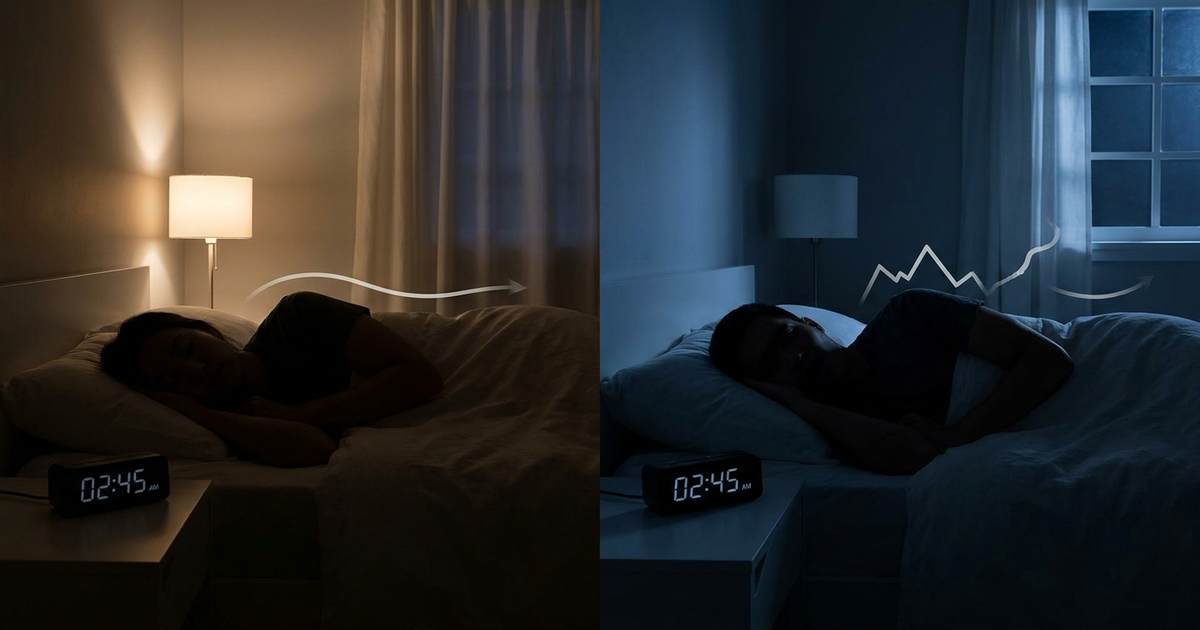
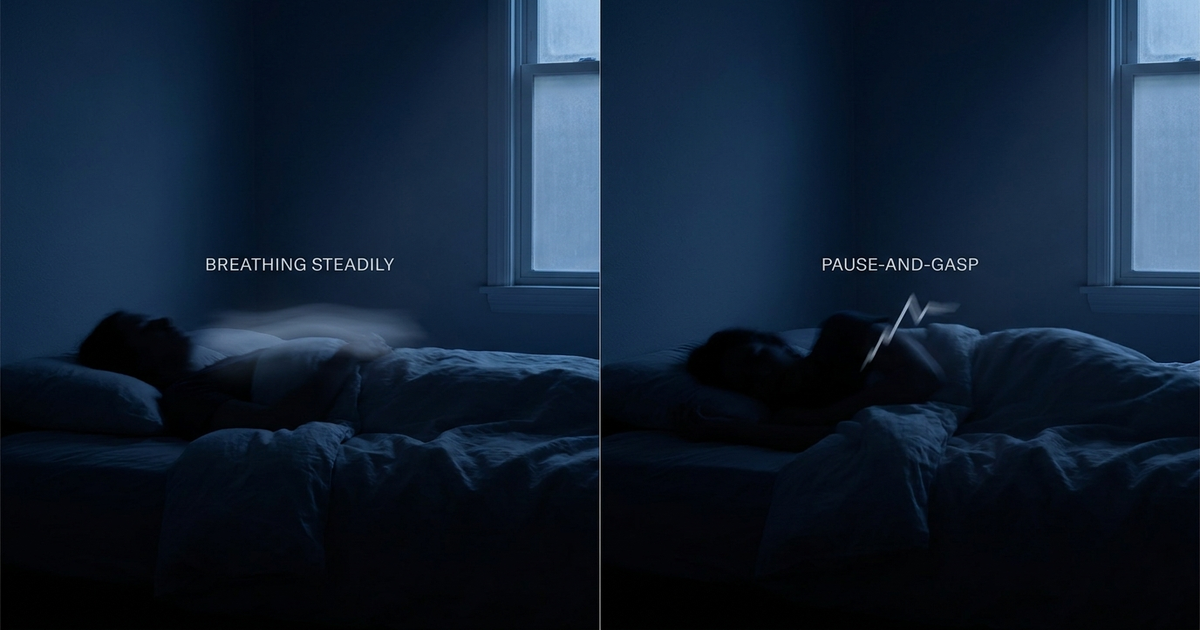
The clinical line is simple even though the symptoms overlap: snoring is vibration in a narrowed but still-open airway, with airflow continuing the whole time. Sleep apnea is the airway actually closing — a pause in breathing longer than 10 seconds, usually followed by a drop in blood oxygen. Loud, constant snoring can exist with a completely normal sleep study, and apnea can exist in someone who barely snores at all, especially if they're thin, female, or have no family history — the group most likely to get dismissed. Volume alone tells you almost nothing; pauses, gasping, and daytime exhaustion are what actually separate the two.
About the author
Chester Takau is an independent writer researching sleep science and meditation. Content is educational and not a substitute for medical advice. See more about this site or get in touch.
Snoring or Apnea? Self-Triage Checklist
Check everything that applies to you, then read the result below.
General guidance only, not a diagnosis. Only a sleep study can confirm sleep apnea — use this to decide whether that conversation is worth having.
What's the actual clinical difference?
Snoring happens when air squeezes past a partially narrowed airway — the soft tissue at the back of the throat vibrates, but breathing itself never stops. Obstructive sleep apnea (OSA) is a step further: the airway collapses enough to fully block airflow for 10 seconds or more, and blood oxygen drops before the brain briefly rouses itself to reopen it, often without the person waking up enough to remember it. A pulmonary practice explainer published in May 2026 puts the distinction plainly — snoring is noise with steady airflow, apnea is a measurable pause with oxygen desaturation. That's the line a sleep study is actually measuring, not how loud the snoring sounds from the next room.
Upper airway resistance syndrome (UARS) is the row most consumer articles skip, and it's exactly the answer for the person who snores like a freight train but gets a "normal" sleep study back. The airway narrows enough to fragment sleep with frequent micro-arousals, but not enough to trigger the oxygen-drop threshold standard apnea scoring looks for — so the study reads clean while the person still wakes up exhausted.
Can you have apnea without snoring, or snore without ever having apnea?
Both, and this is the most repeated correction across clinical blogs and patient forums for a reason. Roughly 94% of people with OSA do snore, which leaves a real minority who don't — often the thin, female, or younger patients doctors are least likely to screen, because the mental image of "sleep apnea" still skews toward an older, overweight, loudly snoring man. On Reddit, that mismatch shows up constantly: people describe years of dismissed symptoms before finally getting tested. If the snoring itself is what's disrupting the household while you sort out which one this is, practical tactics for the partner who has to listen to it are worth running in parallel with getting checked. On the flip side, plenty of loud, committed snorers never develop apnea at all — loudness by itself just isn't a reliable predictor either way.
Is snoring dangerous on its own, or only if it's apnea?
For years the honest answer was "mostly just annoying." A 2026 study following nearly 30,000 adults over four years complicated that: even habitual snoring without diagnosed apnea was linked to accelerated vascular aging and stiffer arteries — an early marker for heart disease. It's not universally accepted yet as a direct cause, but it's enough that "just snoring, nothing to worry about" is no longer a safe assumption on its own. If you're the one lying awake listening to it every night rather than the one doing it, that sleep loss carries its own toll — a question-by-question breakdown of falling asleep next to a snorer covers the listener's side of this specifically.
Will losing weight, or the new weight-loss drugs, fix it?
Weight loss has always helped OSA in people carrying excess weight around the neck and airway, and in December 2024 the FDA approved Zepbound (tirzepatide) as the first prescription drug specifically for moderate-to-severe OSA in adults with obesity, after trials showed it meaningfully reduced breathing interruptions over 52 weeks. That's a real shift — OSA is no longer framed purely as a CPAP-or-nothing condition. It's not a fix for everyone, though: apnea driven by airway anatomy, UARS, or a thin non-obese patient won't respond the same way, and CPAP remains the standard first-line treatment regardless of what else is layered on top.
Do I need a full sleep-lab study, or is a home test enough?
A home sleep test is a reasonable starting point for straightforward, likely-moderate-to-severe cases, but new research is a caution against treating any single night as final. Flinders University researchers found that people whose apnea severity swings a lot from night to night are roughly 30% more likely to have a heart attack, stroke, or heart failure — and a single-night snapshot, lab or home, can miss that variability entirely. If your symptoms and a home test disagree, or daytime exhaustion persists despite a "normal" result, that's a reason to push for a full lab study or multi-night monitoring rather than accepting one night as the final word. If daytime sleepiness has you leaning on naps to get through the day, it's worth checking whether napping is actually helping or just masking the underlying problem before assuming naps have it covered.
Mayo Clinic cardiologist Dr. Virend Somers explains the shared mechanism behind both conditions in the clip above, and it's worth watching if the airway anatomy itself is the part that's hard to picture:
"The tongue can fall backwards and can obstruct the airway, causing either snoring or obstruction."
Quick answers
My partner says I stop breathing and gasp — is that definitely apnea?
It's the single most reliable lay signal there is. Witnessed breathing pauses or gasping should be brought to a doctor even without any other symptoms.
Why do I wake up exhausted and with a headache after 8 hours?
Morning headaches plus unrefreshing sleep despite adequate hours are classic apnea and UARS symptoms — fragmented sleep architecture, not total hours, is usually the driver.
What is upper airway resistance syndrome, exactly?
A milder pattern of airway narrowing that fragments sleep through frequent arousals without dropping oxygen far enough to register on standard apnea scoring — which is why it can hide behind a "normal" study.
The bottom line
Snoring is noise with steady airflow; apnea is a measurable pause with oxygen loss — and neither loudness nor the absence of snoring reliably tells you which one you're dealing with. Gasping, choking, witnessed breathing pauses, morning headaches, and daytime exhaustion are the signals worth acting on, especially if you don't fit the stereotype of who gets tested. Treat one sleep study, home or lab, as a data point rather than a final verdict if your symptoms and the result don't match.
Sources: Mayo Clinic, AASM on Zepbound, Harvard Health, 2026 vascular aging study, Flinders University, Medical Xpress, Johns Hopkins Medicine.
Updated August 2026.
Transparency note: This article was researched and written by Chester Takau with AI assistance for research gathering and drafting. All recommendations reflect the author's own editorial judgment.
Comments
Post a Comment