- Get link
- X
- Other Apps
How to Fall Asleep Next to a Snorer: A Question-by-Question Guide
By Chester Takau · August 2026
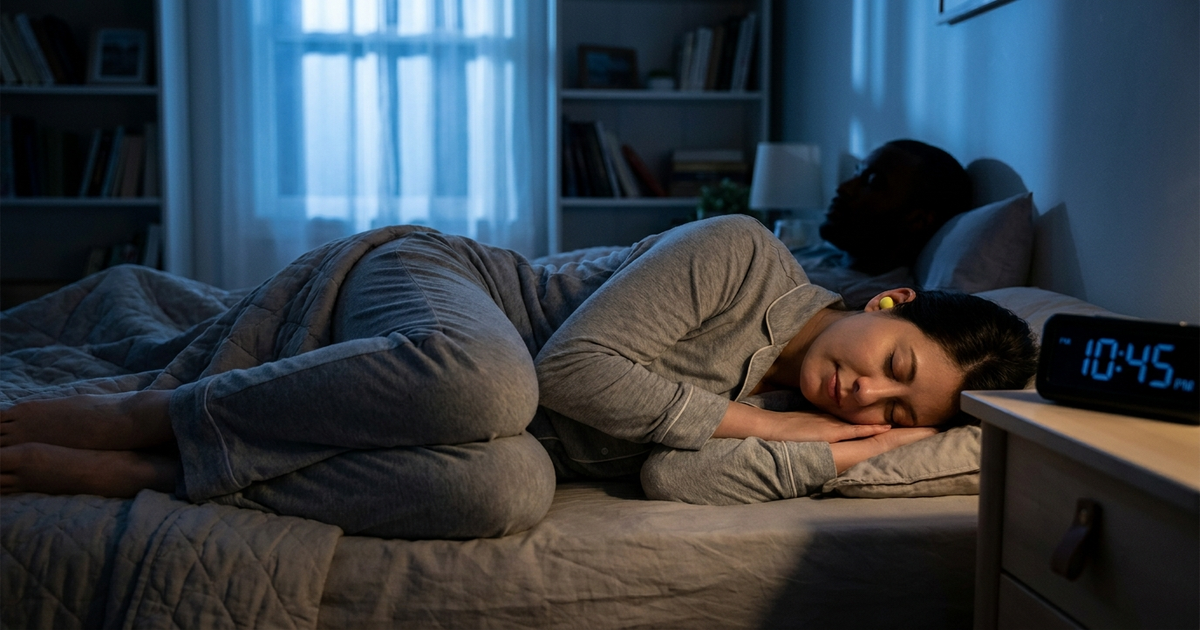
Win the first 20 minutes. Start winding down before your partner does, block or mask the sound before it starts, and give your brain a scripted breathing or attention exercise instead of lying there listening for the next snore. Snoring is usually quietest right after lights-out and gets louder as someone sinks into deeper sleep stages, so that early window is your best — sometimes your only — shot at falling asleep before the noise ramps up. Miss it, and you're fighting an irregular sound that's genuinely harder to tune out than steady noise, not just an annoying one.
The short version
- Snoring gets louder as sleep deepens — the first 15–20 minutes after lights-out is your quietest, most winnable window
- Men average about 47 minutes of nightly snoring, women about 39, and it peaks at ages 55–64 (Sleep Cycle Global Snore Report, 2024)
- Irregular, unpredictable sound is harder for the brain to ignore than steady noise — it's a threat-detection response, not a willpower failure
- Partners of heavy snorers lose roughly an hour of sleep a night; that debt is real even before you talk about separate rooms
- Mouth taping is out of favor with sleep experts in 2026 — side-sleeping and treating the actual cause are what they're recommending instead
Why is snoring so much harder to sleep through than a fan or AC unit?
Because it's unpredictable, not because it's loud. A steady sound — a fan, an air conditioner, ocean waves — gets filtered out by the brain within minutes; this is basic habituation, the same reason you stop noticing a ticking clock. Snoring doesn't habituate the same way because it isn't steady: it starts, stops, changes pitch, sometimes pauses entirely. Each irregular burst re-triggers the brain's attention system, the same low-level threat-detection wiring that evolved to flag sudden or changing sounds as worth checking on. You're not failing to relax — you're up against a mechanism built to keep noticing exactly this kind of noise. That's also why masking with something steady, rather than trying to out-relax the sound itself, tends to work better than willpower alone.
What's an actual wind-down routine for falling asleep before they do?
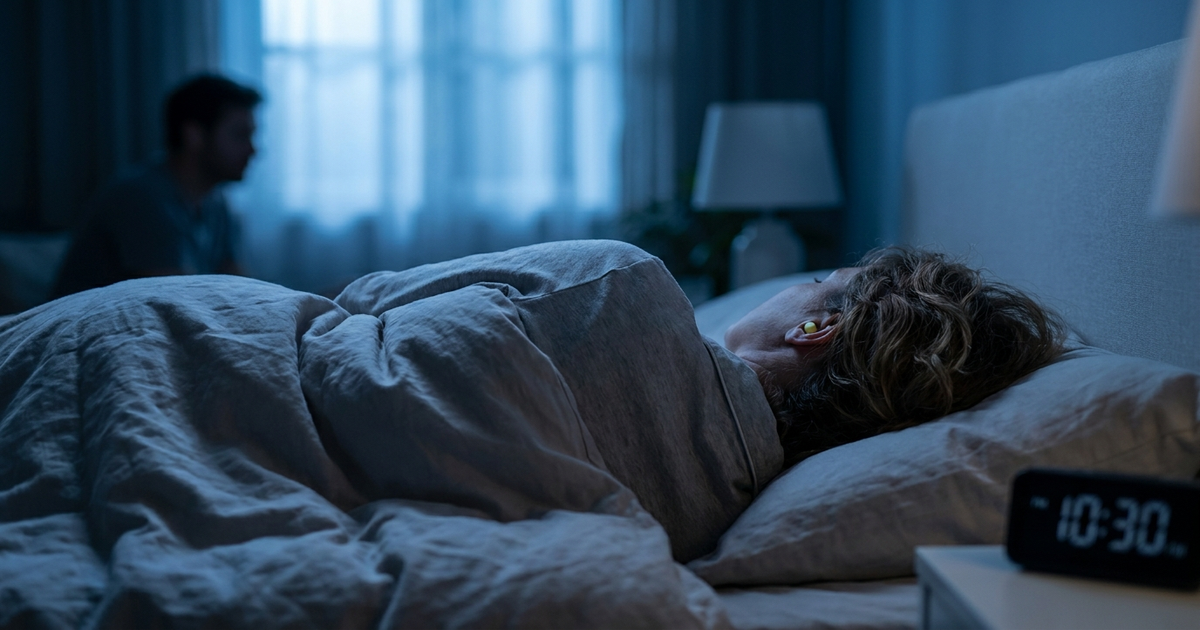
Start 15–20 minutes ahead of your partner's usual bedtime, not at the same time. Get earplugs or a masking sound running before the first snore, not after you're already lying there annoyed — reacting to a sound already in progress is a much harder habit to break than preventing the reaction in the first place. Dim lights and put your phone down on your own schedule, then give your mind a specific, repeatable task instead of open floor to fixate on the next breath from the other side of the bed. A paced breathing pattern works well here because it's structured enough to hold your attention: four seconds in, hold for seven, out for eight, repeated for several rounds. Our step-by-step walkthrough of the 4-7-8 breathing pattern covers the exact counts and what to do if you lose track partway through.
Is there a mindfulness technique for this, or is that just advice nobody explains?
There's a real technique, and most articles do stop at "try meditation" without giving you one. It's a reframing exercise: instead of tracking the snore as an interruption, treat each one as a neutral cue to redirect attention, the same way a meditation bell is used in seated practice. When you hear it, don't tense or brace — note it silently ("sound"), then return to the physical sensation of your own breath moving in your chest. The goal isn't to stop hearing the snore; it's to stop your attention snagging on it and spiraling into frustration, which is usually what actually keeps people awake longer than the noise itself. It takes practice — the first few nights you'll lose the thread constantly — but it turns an unpredictable sound from something you're fighting into something you're simply noticing and releasing.
Earplugs, white noise, or noise-canceling earbuds — which actually helps you fall asleep first?
Earplugs are the most-recommended first move, and the split is about comfort, not effectiveness: some people get on fine with soft silicone or foam, others can't tolerate anything in their ears all night and do better with noise-canceling sleep earbuds instead. White noise or a fan doesn't lower the decibels reaching you — it gives your brain a steady sound to lean on instead of the irregular snore pattern, which plays directly into the habituation point above. Anti-snoring gadgets are more hit-or-miss than either: reviewers testing multiple products in 2026 found only about one in three actually worked. And mouth tape, despite trending hard, has fallen out of favor — current sleep-expert guidance favors side-sleeping and treating nasal congestion or alcohol use over taping anyone's mouth shut.
Sleep physician Dr. Michael Breus runs through ten of these tactics side by side in the video above, including several of the repositioning and timing tricks covered here.
Does nudging or rolling them over actually help, or does it just delay the problem?
It helps in the moment and does nothing long-term, which is exactly the tradeoff people argue about. Snoring gets worse on the back because gravity lets the tongue and soft palate collapse toward the throat, so a roll onto their side genuinely quiets things down. But it wakes both of you, and it doesn't stop the next episode an hour later — some people find that fragmenting sleep twice a night is worse than the snoring itself. A positional aid that discourages back-sleeping without either of you waking (a wedge pillow or a shirt with something sewn into the back) gets the same effect without the interruption, which makes it worth trying before you settle into a nightly routine of elbowing someone awake.
When do I stop fighting for sleep onset every night and consider a sleep divorce instead?
When the nightly routine above stops being enough to get you to sleep at all, not just slower. Partners of heavy snorers lose roughly an hour of sleep a night on average — about 15 full nights a year — and 57% of couples who eventually sleep apart cite snoring as the primary reason, according to 2026 sleep-divorce survey data. Sleeping separately has largely shed its old stigma: over half of people who make the switch report better sleep quality, and a majority say it helped the relationship rather than hurt it. It doesn't have to be permanent or all-or-nothing either — some couples fall asleep together and one person moves once the snoring starts, which keeps the wind-down ritual intact without the sleep debt. If snoring is loud regardless of position, comes with gasping or breathing pauses, or your partner is exhausted despite a full night in bed, that's a signal for a doctor's visit, not just a louder fan — roughly half of loud snorers have undiagnosed obstructive sleep apnea, and treating it has been shown to give the bed-sharing partner over an hour of sleep back. For the fuller toolkit beyond just falling asleep first — including how to raise the apnea conversation without a fight — our complete guide to sleeping next to a snoring partner covers the rest of the night, not just the first twenty minutes.
Tonight's actual plan
Get in bed 15–20 minutes before your partner, earplugs or masking sound already running, and use a paced breathing count or the noticing-and-releasing technique above instead of lying there tracking every snore. If you lose that window and end up short on sleep, a well-timed early-afternoon nap can take the edge off the next day without wrecking the following night — this breakdown of when napping actually helps versus backfires covers how to do that safely. And if none of this is enough most nights, that's real information, not failure — it's either a sign to try a positional fix, or a sign the snoring itself needs a doctor's attention.
Transparency note: This article was researched and written by Chester Takau with AI assistance for research gathering and drafting. All recommendations reflect the author's own editorial judgment.
Related on MindfulJourneySleep: How to Fall Asleep Fast: 7 Methods That Work Tonight
Comments
Post a Comment