- Get link
- X
- Other Apps
The Phone Before Bed Sleep Fix That Actually Works (It's Not About the Blue Light)
By Chester Takau · July 2026
If you can't put the phone down once you're in bed, the fix isn't a stricter blue light filter — it's picking one level of friction and actually committing to it tonight. A February 2026 AASM survey found 38% of U.S. adults say bedtime doomscrolling makes their sleep slightly or significantly worse, and only 14% never check a screen at bedtime. What's changed is the science underneath that complaint: blue light itself now looks like a minor factor, while the content you're consuming and the stress response it triggers look like the real problem. Below is a tiered fix built around that finding, ordered from lowest effort to most effective.
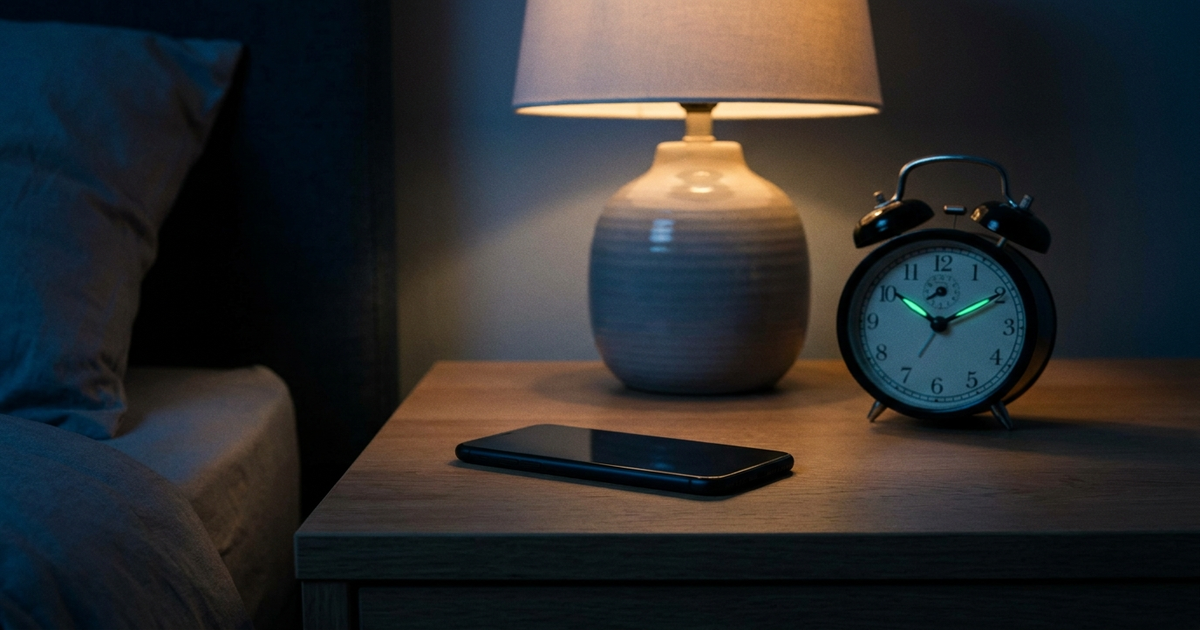
1. The real culprit isn't the blue light — it's what you're looking at
A 2024 meta-analysis of 11 experimental studies, covered by The Conversation and TIME, found that bright, blue-light screens before bed delay sleep onset by an average of just 2.7 minutes. A 16-expert National Sleep Foundation consensus statement reached a similar conclusion in kids and teens, and didn't reach consensus that blue light alone impairs adult sleep at all. RAND sleep researcher Dr. Wendy Troxel and University of Arizona's Lauren Hartstein both point to the same reframe: it's the interactive, emotionally charged content — social media, news, an argument in the group chat — that spikes alertness and delays sleep, not the photons hitting your eyes. That distinction matters because it changes what actually fixes the problem: dimming your screen helps a little; changing what you do on it helps a lot more.
It also explains why a dark room makes things worse. A 2026 study out of Qazvin University of Medical Sciences, tracking 187 students, found that using a phone in a fully dark room had roughly double the impact on next-morning concentration compared to using it with the lights on — likely because a dark room maximizes both the alerting effect of the screen and the temptation to keep scrolling with nothing else competing for attention. If you want the fuller mechanism of how light exposure timing affects your sleep-wake signal generally, our guide to resetting your body's internal clock covers it in more depth.
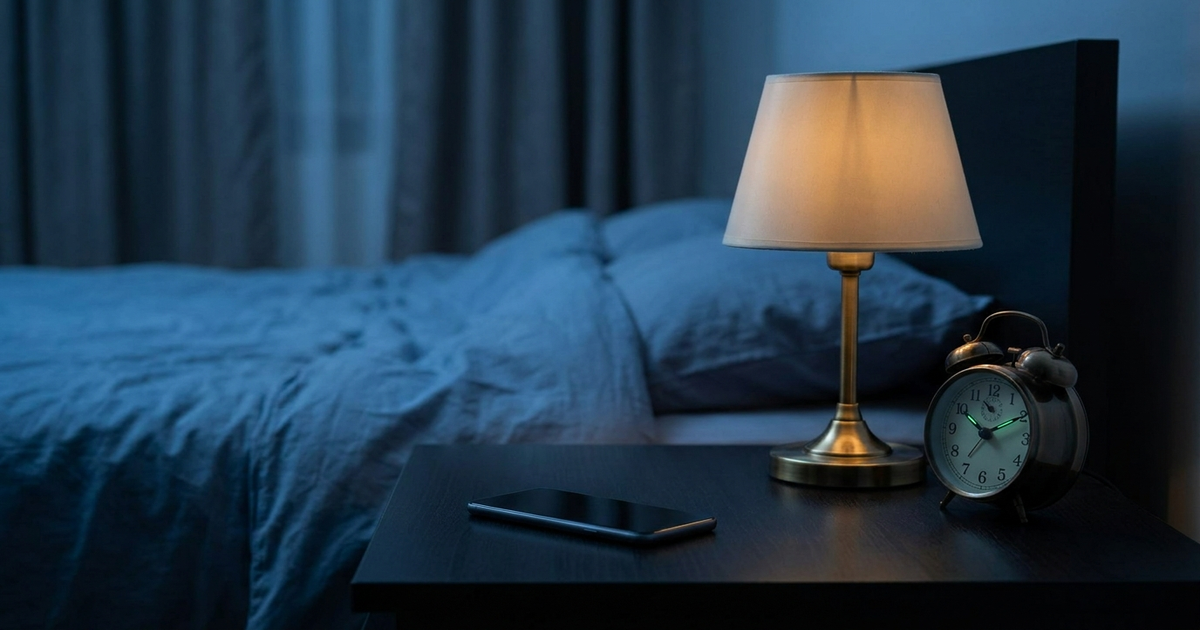
2. Level 1 fix: grayscale mode and Do Not Disturb (five minutes, tonight)
If you're not ready to change your habits, change your phone's habits instead. Android's Bedtime Mode and iOS's scheduled Do Not Disturb both strip color from the screen and mute non-urgent notifications on a timer — no willpower required once it's set. An Android Police writer credited this exact setting, which they described as deliberately "rude" about cutting off notifications, with fixing sleep that years of good intentions hadn't touched. It won't stop you from scrolling, but a gray, silent feed is measurably less compelling than a bright, buzzing one, which is enough to shorten most sessions even if it doesn't end them.
3. Level 2 fix: a hard 30-minute cutoff, phone charging across the room
This is where the data gets harder to wave off. A March 2025 JAMA Network Open study, drawn from the American Cancer Society's CPS-3 cohort of more than 122,000 adults, linked daily pre-bed screen use to a 33% higher prevalence of poor sleep quality and 7.64 fewer minutes of sleep on workdays — roughly 50 minutes a week. The AASM's standing advice matches this: put handheld electronics down 30 to 60 minutes before bed. The part people skip is the "across the room" detail — a phone charging on the nightstand still gets picked up out of habit even after you've decided to stop.
The video above walks through this same harm-reduction approach — brightness, distance, and timing adjustments rather than an all-or-nothing ban — which is a realistic middle ground if going fully phone-free feels like too much change at once.
4. Level 3 fix: phone out of the bedroom entirely — and the alarm clock problem, solved
Across forums, tech outlets, and sleep research alike, this is the one fix people describe as working when timers and good intentions failed — the phone physically can't be reached without getting out of bed. The objection is always the same: "but it's my alarm clock." A cheap analog or sunrise alarm clock solves that for under twenty dollars, and it removes the single biggest reason phones end up back on the nightstand. For emergency calls, leave the phone charging just outside the bedroom door on ring volume rather than deep in another room — close enough to hear, far enough that checking it means physically getting up first.
This isn't just a willpower trick. Keeping the bedroom associated with sleep alone, rather than scrolling, is one of the core stimulus-control principles behind the home-based version of cognitive behavioral therapy for insomnia — your brain learns the room means sleep, not stimulation, and that association does real work at bedtime.
5. If you use your phone to fall asleep, you're not necessarily breaking the rule
Most advice assumes the phone is entirely off-limits, which leaves out everyone who falls asleep to a podcast, an audiobook, or a white noise app. The fix here isn't removing the phone — it's separating the screen from the audio. Start the audio, then turn the screen face-down or lock it dark, set a sleep timer so it doesn't keep playing (and keep tempting you to check it) for hours, and resist the urge to touch it once it's started. If you keep unlocking the screen to change tracks, that's a sign the phone is still doing the scrolling job, just with better lighting — in that case a small dedicated speaker or an old phone kept permanently in airplane mode is worth the twenty-dollar swap.
6. What to do with the 30 to 90 minutes you just freed up
Cutting the phone without a replacement habit usually just means lying there bored and reaching for it anyway. A short, boredom-proof wind-down menu works better than willpower: a physical book, light stretching, a few minutes of journaling, or a full beginner walkthrough of a guided relaxation practice if lying still with your thoughts is the hard part. The goal isn't to fill the time perfectly — it's to have something ready before 9 p.m. hits and the phone is the only thing within reach.
Which level should you actually start at?
Start at whichever level you'll actually keep. Grayscale and Do Not Disturb cost nothing and still help. The 30-minute cutoff with the phone across the room is where the JAMA data says the real sleep-quality gains show up. Phone-out-of-the-bedroom is the strongest fix but only works if you've solved the alarm clock objection first, or you'll quietly undo it within a week. None of this requires fixing the blue light — it requires putting distance between you and the doomscroll, which the 2026 research says was always the actual problem.
Transparency note: This article was researched and written by Chester Takau with AI assistance for research gathering and drafting. All recommendations reflect the author's own editorial judgment.
Related on MindfulJourneySleep: The Digital Detox Before Bed Routine That Actually Sticks; Yoga Nidra vs Meditation for Sleep: Which One Actually Gets You There
Comments
Post a Comment